


Police Station Idle
4.3477.00 Reviews
App Specs
- Version
- 1.6.1
- Updated On
- License
- Free
- Downloads
- 1,000,000+
- Developer
- Sekgames
- Categories
- Simulation
- Platform
- Android
Screenshots
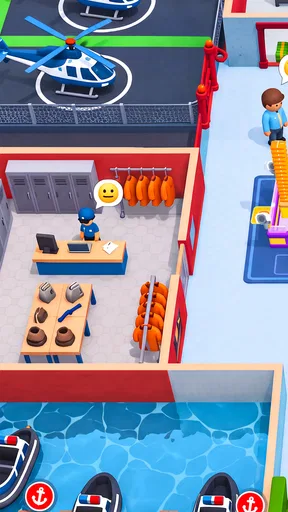
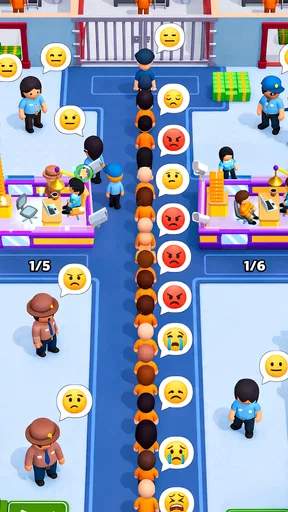
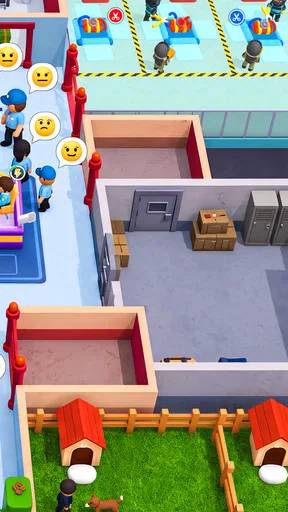
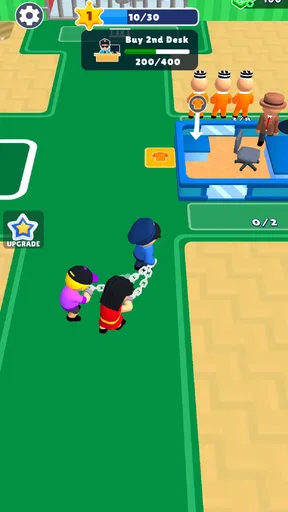
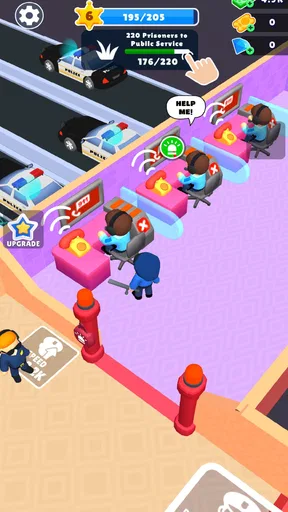

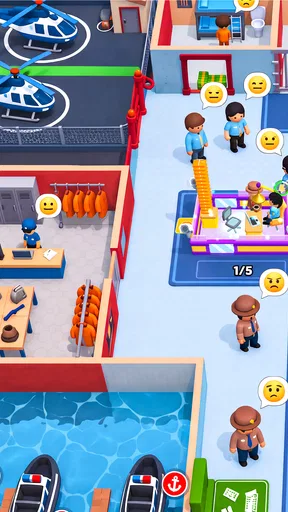
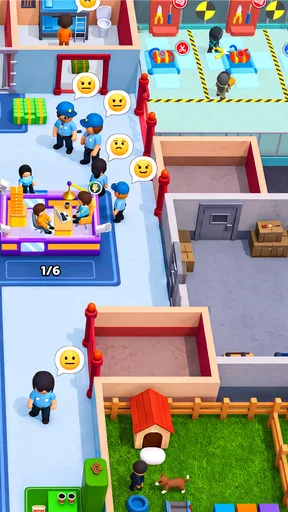
 Analysis by AppCompare
I went into Police Station Idle expecting a light management game, and that is exactly where it works best. It is a simulation built around developing a police station, improving its operation, and making steady progress through short sessions rather than demanding constant attention. The basic idea is easy to understand, but deciding whether it is worth keeping installed depends on what you want from an idle game: a calm upgrade loop, a more involved management challenge, or something with deeper police-themed strategy.
My overall impression is positive, with an important qualification. This is a free game from Sekgames that is easy to start and friendly enough for a broad audience. It has an average rating of 4.2 from around 27 thousand ratings and has passed one million installs, so it clearly appeals to a sizeable group of casual players. I can see why: the station theme gives the usual idle formula a little more personality, while the progress is simple enough to follow without studying a manual.
What to consider before choosing this station simulator
The first decision is how much control you want. In Police Station Idle, the pleasure comes from watching a station gradually become more capable and making sensible improvements along the way. If you enjoy checking a game, collecting progress, choosing an upgrade, and returning later, the format is comfortable. If you want detailed investigations, tactical patrol planning, or a story-driven police adventure, this is likely too focused on routine development.
I also judge idle games by how clearly they communicate progress. A good one should let me understand why an upgrade matters instead of presenting a pile of buttons with no meaningful choices. Here, the station setting gives each improvement a natural context. I am not simply building an anonymous business; I am trying to make a public-service facility function better. That framing makes the repeated upgrade cycle easier to accept, especially during the first sessions.
Another useful criterion is session length. This is the kind of game I would open while waiting for transport, taking a short break, or winding down before bed. It does not ask me to reserve a long uninterrupted block of time. That makes it more approachable than many simulation games that expect constant planning. At the same time, players who prefer long, hands-on sessions may find the idle structure too passive after the initial novelty fades.
The age rating is Everyone, and the game is free to download. It runs on Android devices using version 7.0 or later, which makes it accessible to many older phones and tablets. The current version is 1.6.1. Those details matter if you are choosing a low-commitment game for a family device or an older handset, although the actual experience will still depend on the device and on how much multitasking you expect from it.
The first few sessions and the basic rhythm
My early sessions followed a straightforward pattern: inspect the station, improve what seems most useful, let progress accumulate, and return to make another decision. That rhythm is the central appeal. I never felt lost about the broad objective, and the police-station theme gave the process a clear identity instead of making it feel like a completely abstract number generator.
Worth Reading Before You Choose

EA SPORTS FC Mobile 26 Is a Bigger Football Game, but It Takes Time

Flipboard Shows What News Apps Must Do Beyond the Feed

Switching to Android Auto Means Rethinking Your Driving Routine

Google Calendar Makes a Crowded Week Easier to Manage

Ludo King Makes the Most of the Minutes Between Plans

Baby Panda World Brings Quick Play to Modern Phones, but Its Game Library Feels Busy
The best way to approach the opening is not to spend every available reward immediately. I found it more useful to pause and consider which improvement would make the next return more productive. In an idle game, a small decision made early can affect how quickly later choices become available. Even when the choices are simple, treating them as a sequence rather than as isolated taps makes the station feel more like a project.
A practical routine is to check the game at natural points in your day rather than forcing yourself to keep it open. I would make one round of improvements before putting it away, then return when I had a few minutes. That keeps the game relaxing. Leaving it running constantly can make the experience feel more like maintenance than play, particularly once the first sense of discovery has passed.
Where the police-station theme gives it an advantage
The strongest feature is not a single mechanic but the way the theme supports the idle structure. “Improve a station” is more memorable than “increase production,” even though the underlying loop is still about gradual growth. The setting gives me a reason to care about the next improvement and makes the interface easier to read emotionally: a better station suggests a more capable operation.
That makes it a good introduction to idle simulation games for someone who does not normally play management titles. A newcomer can understand the fantasy immediately without learning a complicated economy. I would be comfortable recommending it to a friend who wants a low-pressure game but does not enjoy fighting, racing, or competitive multiplayer.
It also works well as a background game. I can play for a few minutes, put it down, and return without needing to remember a complicated narrative or recreate a tactical plan. That is a real advantage over more demanding simulation games, where missing a session can leave me unsure about what needs attention. Here, the station remains the focus, and the experience is built around gradual progress.
There is another subtle strength: the theme creates a useful mental checklist. When I return, I naturally ask what part of the station should be improved next and whether I should save resources for a more meaningful step. This is more satisfying than blindly tapping a reward button. My advice is to use the theme as a planning aid: think in terms of improving the station’s overall flow, not just chasing whichever upgrade is immediately available.
Small habits that make the progression feel better
One habit helped me avoid wasting the game’s short sessions: I made a quick decision before collecting everything. Instead of opening the game and tapping through every available action automatically, I first looked at the next goal I wanted to reach. That gave each visit a purpose and reduced the feeling that I was simply clearing notifications.
I also recommend setting a personal stopping point. For example, I might make one improvement cycle and then leave rather than continuing until the game has no obvious action left. This is especially useful for players who enjoy idle games as a relaxing break. The game is easier to appreciate when it supports your schedule instead of quietly taking over it.
A third tip is to judge upgrades by their effect on your next return, not only by their immediate visual appeal. In a station-building game, an improvement that speeds up the general rhythm may be more valuable than one that merely feels impressive. I would not treat every reward as equally important. Keeping a little patience in the loop makes the development feel more deliberate.
Finally, I would avoid assuming that the fastest possible progress is the only successful way to play. The game is better suited to steady development than to frantic optimization. If you turn every session into a strict calculation, you may remove the relaxed quality that makes this particular idle simulator pleasant in the first place.
How it compares with other kinds of simulation games
Police Station Idle sits between a traditional management game and a very hands-off idle title. Compared with a detailed city or business simulator, it asks less of me. I do not need to monitor a large network of systems or plan a complicated long-term economy. That simplicity is a benefit when I want a quick break, but it is also the main limitation for players who enjoy deep strategy.
Compared with a story-heavy police game, the emphasis is completely different. There is no reason to choose this title if your priority is following characters, solving cases through dialogue, or making dramatic moral choices. The police setting is a framework for construction and progression, not a replacement for a detective narrative.
It also differs from competitive games because the pressure is much lower. There is no need to compare my station with another player during every session or react to an opponent’s move. That makes it suitable for people who want a private, predictable experience. On the other hand, players who need competition to stay motivated may find the loop lacks urgency.
The closest alternative category is the broader group of idle tycoon games. Those titles often use restaurants, shops, factories, or other businesses as their setting. Police Station Idle has a more distinctive subject, which helps it stand out when I am tired of managing the same commercial themes. The trade-off is that a police station may appeal strongly to one player and not at all to another. If the theme does not interest you, the underlying loop may not be enough to carry the experience.
For someone choosing between this and a more complex simulator, I would ask one simple question: do you want to make a few meaningful upgrades or manage a whole organization in detail? Choose Police Station Idle for the former. Choose a deeper alternative when you want layered systems, extensive planning, or a campaign that keeps introducing new challenges. Neither approach is automatically better; they serve different moods.
Where another game may fit better
I would skip this game if I need constant interaction. The idle design means that part of the experience is waiting for progress and returning to continue the cycle. A hands-on strategy game will be a better choice if I want every minute to involve movement, tactical decisions, or active problem-solving.
I would also look elsewhere if long-term variety is my main concern. The station theme is appealing, but the main loop remains focused on developing one central operation. Players who quickly need new maps, changing objectives, or several distinct modes may prefer a simulation with a broader campaign structure.
There is a similar issue for players who dislike in-app purchase prompts in free games. Police Station Idle is free, but optional purchases range from $1.99 to $59.99 per item. I can play without treating those purchases as the point of the game, yet anyone who prefers a completely paid-once experience should consider that difference before installing. A purchase can be convenient, but it should not become the reason you continue playing.
My practical advice is to decide your boundary before you begin. If you are comfortable playing at the free pace, the game is easier to evaluate fairly. If you already know you will feel pressured to buy whenever progress slows, a paid simulation or a game with a different monetization model may be a better fit.
What switching to it feels like
The cost of switching is low in terms of learning. I did not need to memorize a large rule set before making useful decisions, and the station concept is immediately understandable. That makes it a convenient replacement for another casual idle game when I want a fresh theme without taking on a demanding new hobby.
The bigger cost is expectation. If I arrive expecting a full police-management simulation, I may be disappointed because the game’s appeal comes from simplicity. Switching from a complex title means giving up some depth in exchange for shorter sessions. Switching from another idle game is easier because the basic habit feels familiar, but the novelty will depend on whether the police-station setting speaks to me.
There is also a time-management cost. Idle games can become part of a routine almost without notice. I found the healthiest approach was to treat the station as a small side activity, not as a task list that needed constant checking. That is especially relevant for anyone who already has several games competing for attention.
For families, the Everyone rating makes the game approachable from a content perspective. Still, I would explain the optional purchase model before handing it to a child, particularly because individual items can reach a much higher price than a casual player might expect from a free download. The important lesson is simple: free installation does not mean every part of the experience is free.
Who should install it
I recommend Police Station Idle to players who like calm progression, short check-ins, and a clear theme. It is a good match for someone who wants a simulation game that can sit alongside a busy day rather than demand full attention. It is also a sensible starting point for newcomers to idle games because the police-station concept is easy to understand and the broad objective is never confusing.
I am less enthusiastic about it for expert management players. If your enjoyment comes from balancing many connected departments, responding to unpredictable crises, or shaping a detailed city, this will probably feel too narrow. The same applies to anyone looking for a police story rather than a station-development loop.
For a realistic everyday use case, I can imagine opening it during a short coffee break, making one considered improvement, and closing it again. Later, I might return after finishing work and check how the station has progressed. That pattern suits the game much better than trying to turn it into an all-evening marathon.
My recommendation after playing
Police Station Idle succeeds because it keeps its promise focused: build up a police station through an accessible idle simulation loop. The theme gives the routine more character than a generic business setting, and the free entry point makes it easy to try. Sekgames has aimed this at a broad casual audience, and the Everyone rating supports that approachable presentation.
My recommendation is to install it if you want a low-pressure station-building game and are happy with gradual progress. Start with a free-play mindset, use short sessions, and make upgrades with a little intention instead of tapping automatically. That approach brings out the game’s best qualities.
I would not choose it as a substitute for a deep strategy simulator, a detective adventure, or a competitive management game. Those alternatives are better when you need complexity or constant involvement. But for a quiet, easy-to-follow game that gives an idle formula a recognizable police setting, this is a worthwhile option. The deciding question is whether steady station growth sounds relaxing to you. If it does, the game earns a place among your casual mobile downloads.
Pros
- Simple idle mechanics make it easy to play in short sessions.
- Upgrades provide a clear sense of progress over time.
- Police-themed tasks offer a light and approachable management experience.
- Offline earnings help maintain progress when the game is closed.
- Colorful visuals and simple controls suit casual players.
Cons
- Progress can become repetitive after the initial upgrades.
- Some upgrades may require considerable waiting or repeated tapping.
- The strategic depth is limited compared with full management simulators.
- Optional ads may interrupt the flow or be needed for extra rewards.
- Long-term replay value may be modest once most areas are upgraded.
FAQs for Police Station Idle
What is Police Station Idle?
Police Station Idle is a casual management game in which you build, expand, and operate your own police station. You are responsible for improving facilities, managing officers, handling incoming cases, and keeping the station running efficiently. Its idle mechanics allow the station to continue generating progress while you are away, making it suitable for short play sessions as well as longer gameplay periods.
How does the gameplay in Police Station Idle work?
The main gameplay loop focuses on upgrading rooms, hiring or improving staff, processing cases, and increasing the station’s overall efficiency. As your police station grows, you unlock additional areas and more demanding responsibilities. You regularly spend earned resources on improvements, then watch your station handle tasks more quickly and generate greater rewards over time.
Can I play Police Station Idle without an internet connection?
Police Station Idle may support some offline progress, allowing certain station activities to continue when the game is closed or disconnected. However, features such as advertisements, cloud synchronization, special events, purchases, or reward claims may require an internet connection. Offline functionality can also vary between versions, so checking the current store description is recommended before downloading.
Is Police Station Idle free to download and play?
Police Station Idle is generally available as a free download, but the game may include optional in-app purchases and advertising. These purchases can provide resources, speed up upgrades, remove waiting periods, or offer other convenience benefits. You can usually make progress without spending money, although players who prefer faster development may encounter offers designed to accelerate station expansion.
Is Police Station Idle suitable for children?
Police Station Idle is designed around light management and idle progression rather than realistic police violence or complex simulation. Nevertheless, parents should review the game’s age rating, advertising practices, and available in-app purchases before allowing younger children to play. If the game includes online promotions or purchase options, parental controls are advisable to prevent accidental spending.


